


Improving Safety in One of the Worlds Toughest Work Environments
In Brief
Imagine a global self-verification mobile app for the most remote teams
Offshore work is notoriously dangerous. And reporting and disseminating health and safety information to and from oil rigs is extra challenging.
One of the world’s largest Oil and Gas companies realized a 65% reduction in pipe handling drops and 70% reduction in higher severity drops after implementing a mobile application for enterprise reporting and data management.
Key Takeaways
Reducing risk and incidents with mobile HSE auditing and reporting.
-
Mobile self-verification checks for improved operating discipline
Immediately after introducing this mobile tool, there was a 65% reduction in pipe handling drops and 70% reduction in higher severity drops from the previous year.
-
Global alerts for better visibility and targeted action
Safety and operational risk experts are immediately alerted to important notifications for quicker identification and response to problem areas.
-
Intrinsically safe hardware for hazardous, remote areas
Partnerships with Samsung and eCom deliver intrinsically safe hardware for use in some of the most remote and hazardous areas of the world.
-
Secure data transfer across the globe
Strict security features such as two-factor authentication and device storage encryption secure confidential and operation-critical data.

The Challenges
Errors and delays in reporting
Dire consequences can result from errors and delays in reporting self-verification checks as well as Health, Safety, and Environment (HS&E) rig and drill site audits. This global wells organization knows these checks on drilling rigs are essential to helping teams follow procedures and keep people safe.
Complex operational environment on a global scale
Global visibility into self-verification and oversight (SV&OS) activities is challenging. Rough and remote physical environments combined with the complexities of offshore drilling only compound difficulties:
- Changing teams and shift rotations
- Contractor workforces
- Inconsistent internet access
- Wet and hazardous conditions not friendly to technology
The organization needed an innovative technical solution to equip their teams to continue safe and compliant operations.
The Solution
A global mobile and web application that reduces safety incidents.
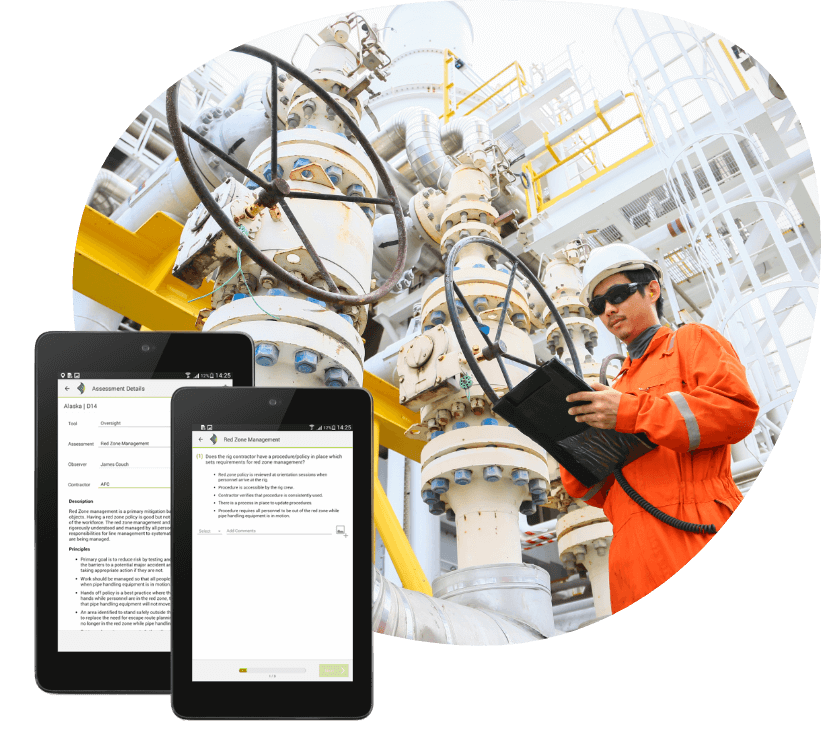
Resource Data created a mobile app solution and corresponding enterprise-level application to record, share, and analyze inspection data with minimal delay. The new system allows engineers, wellsite and operation leaders, and inspectors to record and share self-verification and oversight (SV&OS) data using tablets in the field. Additionally, field users confirm reading safety alerts and completing required actions.
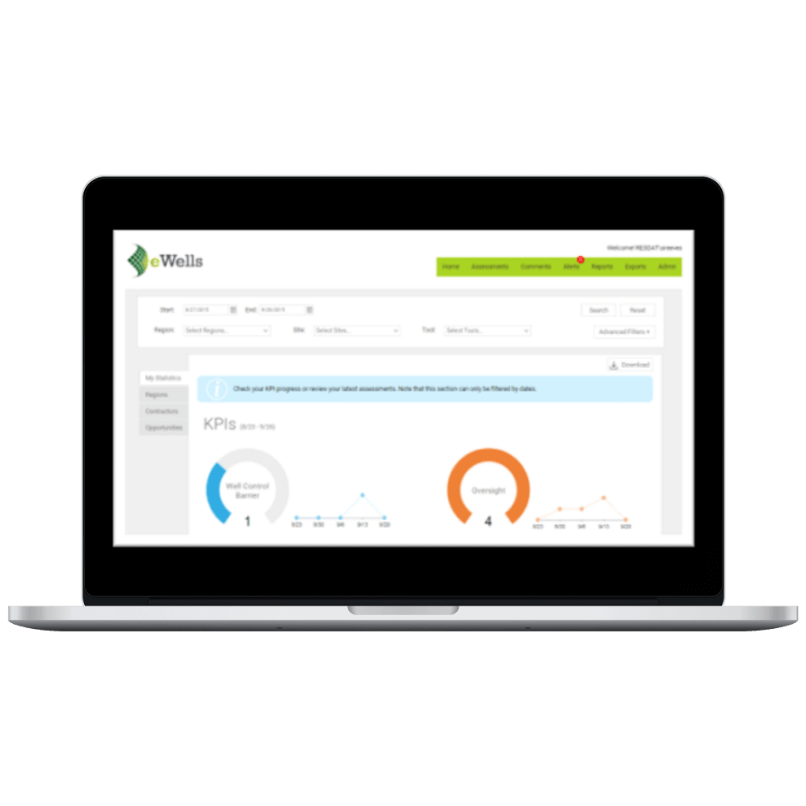
Safety and operational risk experts then have immediate access to assessments, reports, and dashboards within a web portal. Leaders can monitor procedural discipline compliance and disseminate important information to proactively address gaps.
Features
Deceivingly simple. Every detail still considered.
-
Real-time syncing for immediate access to data
Global rig and well site data is automatically cached and synced to an authoritative central repository when there is cellular or Wi-Fi connectivity. Central operations teams can then immediately access and analyze the data.
-
Customizable forms and reports for enhanced management
Custom assessment forms are created through a web-portal and distributed to specific organizations, regions, or sites around the world with the click of a button.
-
Global alert tools for distributing notifications
Notifications are sent with optional PDF attachments requiring recipients to open and confirm that they have read the notification before they can sync assessments.
-
Strict security measures for safeguarding data
Two-factor authentication and device storage encryption ensure data is protected even when sharing across the globe. Measures adhere to the strictest corporate requirements.
-
Easy device management for support and extra security
Simple, secure device management and support to triage issues, push updates, and monitor devices for suspicious behaviors and programs.
-
Intrinsically Safe hardware for hazardous conditions
A partnership with Samsung and eCom delivered custom, intrinsically safe hardware that are ATEX zone 1/2, and NEC class 1 Div 1/2 certified.
“It’s a simple but important tool for how we’re getting our people on the front line to do a better job in overseeing contractors. And we can push data to these devices around the world.”
- COO
Results
More visibility than ever. Better safety outcomes as a result.
The new system in use around the globe is significantly reducing field data collection errors, improving audit turnaround time, and allowing for quick identification and response to problem areas.
Significant findings from rigs and well sites around the world are now shared with safety and operational risk experts in an efficient and timely manner.
With clearer and faster visibility, teams proactively address gaps leading to improved performance. Immediately after introducing this innovative solution, there was a 65% reduction in pipe handling drops and 70% reduction in higher severity drops from the previous year.
“The system helps facilitate efficient, quick data retrieval form the field to the central offices in a way we’ve never had access to before”
~ Wells Manager

What's Next
Committed to safety. Always improving.
The progress made toward safer operations is commendable. But this organization recognizes it cannot grow complacent from past achievements. Innovation continues as they review, evaluate, and improve both the digital solution and the self-verification and oversight (SV&O) processes it supports.
Resource Data continues to support these efforts along the way.



A mobile self-verification app can reduce safety incidents by helping field teams complete procedural checks, share findings quickly, and give safety leaders faster visibility into risk patterns. In offshore drilling environments, delays or errors in health, safety, and environment reporting can prevent teams from identifying unsafe conditions before they become serious incidents.
In Resource Data’s case study, one of the world’s largest oil and gas companies implemented a mobile application and enterprise reporting system for self-verification and oversight activities. Engineers, wellsite and operations leaders, and inspectors could record and share inspection data from tablets in the field, while safety and operational risk experts could access assessments, reports, and dashboards through a web portal.
This solution led to measurable risk reduction. Immediately after introducing the mobile tool, the organization saw a 65% reduction in pipe handling drops and a 70% reduction in higher severity drops from the previous year. Resource Data’s example shows how mobile HS&E auditing can connect front-line activity to enterprise safety action.
Faster HS&E reporting matters because global wells organizations operate in hazardous, remote, and fast-changing environments where delayed information can increase operational risk. Self-verification checks and rig or drill site audits only create value when findings reach the right experts quickly enough to support corrective action.
Resource Data’s case study describes how errors and delays in reporting self-verification checks and HS&E audits can have dire consequences. The oil and gas organization needed better global visibility into self-verification and oversight activities across drilling rigs and well sites. Resource Data created a mobile app and corresponding enterprise-level web application to record, share, and analyze inspection data with minimal delay.
This solution helped with quicker identification and response to problem areas. Significant findings from rigs and well sites around the world could be shared with safety and operational risk experts in a more efficient and timely way, improving audit turnaround time and supporting proactive risk management.
Global visibility into safety verification data creates business value by helping leaders identify risk trends, monitor procedural discipline, and respond to gaps before they become larger safety or operational problems. Without consistent visibility, field audits can remain isolated at individual sites. That makes it harder to spot repeated issues across regions or contractor teams.
In Resource Data’s case study, safety and operational risk experts gained immediate access to assessments, reports, and dashboards in a web portal. Leaders could monitor procedural discipline compliance and disseminate important information to address gaps. The system also alerted experts to important notifications so they could identify and respond to problem areas more quickly.
The business impact is risk reduction, stronger operational oversight, and better use of safety data across the enterprise. For a global wells organization, visibility is a way to turn field observations into targeted action across hazardous work environments.
Oil and gas teams can collect reliable inspection data in remote or hazardous environments by using mobile tools designed for field conditions, offline or intermittent connectivity, secure syncing, and intrinsically safe hardware. Offshore rigs and well sites create practical challenges that ordinary office systems are not built to handle.
Resource Data’s case study notes operational constraints: changing teams and shift rotations, contractor workforces, inconsistent internet access, wet conditions, and hazardous environments that are not friendly to technology. Resource Data’s solution allowed field users to record self-verification and oversight data on tablets, automatically cache rig and well site data, and sync it to an authoritative central repository when cellular or Wi-Fi connectivity was available.
Results included fewer data collection errors and faster movement of field information to central offices. Teams can keep working in difficult environments while still giving safety leaders access to accurate, timely inspection data.
Global safety alerts improve front-line operating discipline by making sure important notifications reach the field and that recipients confirm they have read and acted on them. In high-risk operations, publishing safety information is not enough; organizations need a way to distribute alerts and verify acknowledgment.
In Resource Data’s case study, field users confirmed reading safety alerts and completing required actions through the mobile application. The system sent notifications with optional PDF attachments and required recipients to open and confirm that they had read the notification before they could sync assessments. Safety and operational risk experts were alerted to important notifications for quicker identification and response.
This example shows how digital alert workflows can support operating discipline by connecting safety messaging, acknowledgment, and assessment activity in one system.
Mobile inspection tools can support contractor workforces and rotating shifts by standardizing the way checks are completed, recorded, and shared across changing teams. In offshore and well site operations, continuity is difficult when responsibilities pass between shifts, regions, contractors, and operational leaders.
Resource Data’s case study identifies changing teams, shift rotations, and contractor workforces as major challenges for global self-verification and oversight. The mobile app gave engineers, wellsite and operations leaders, and inspectors a consistent way to record and share SV&OS data in the field. The corresponding web portal allowed central safety experts and leaders to access reports and dashboards without waiting for slow manual reporting cycles.
Standardized digital workflows reduce the risk that inspection details are lost during handoffs and help leaders see whether procedural discipline is being followed across a global operating environment.
Offline caching and syncing help field teams keep working when internet access is inconsistent by storing inspection data locally and transferring it to a central system when connectivity becomes available. This is essential for offshore rigs and remote well sites where cellular or Wi-Fi access may be limited or unreliable.
In Resource Data’s case study, global rig and well site data was cached and synced automatically to an authoritative central repository when cellular or Wi-Fi connectivity was available. That design allowed field teams to continue recording self-verification and oversight data without waiting for a stable network connection, while central operations teams could access and analyze the data after sync.
With this solution, teams can capture data closer to the work; reduce errors from delayed entry; and still support enterprise-level dashboards, alerts, and reporting once the information reaches the central repository.
Global mobile HS&E auditing applications need security features that protect confidential and operation-critical data on devices, during access, and across international data flows. Because field devices may be used in remote, hazardous, or contractor-supported environments, security must be practical for field work while meeting strict corporate requirements.
Resource Data’s case study highlights two-factor authentication and device storage encryption as core safeguards. The mobile and enterprise system protected data even when information was being shared around the globe. The case study also describes device management capabilities that allowed support teams to triage issues, push updates, and monitor devices for suspicious behaviors and programs.
The technical and business impact is risk reduction for sensitive operational data. This example shows that safety modernization must include data protection, device oversight, and access controls, not just better forms and dashboards.
Intrinsically safe hardware is important because mobile tools used on drilling rigs and well sites must operate in hazardous environments without creating additional safety risk. Standard consumer devices may not meet the certification requirements needed for areas where flammable gases, vapors, or other hazards may be present.
In Resource Data’s case study, partnerships with Samsung and eCom delivered custom intrinsically safe hardware for use in some of the world’s most remote and hazardous areas. The devices were ATEX zone 1/2 and NEC class 1 Div 1/2 certified, allowing the mobile self-verification solution to be used in environments where ordinary hardware would not be appropriate.
Certified hardware lets teams capture inspection and HS&E data closer to the work while respecting the safety constraints of offshore and oilfield environments.
Customizable forms and reports improve enterprise safety management by letting organizations tailor assessments to specific regions, sites, operational needs, and compliance requirements. Static forms can become a bottleneck when safety processes need to evolve across a global organization.
Resource Data’s case study describes a web portal where custom assessment forms could be created and distributed to specific organizations, regions, or sites around the world at the click of a button. Field users completed those forms through the mobile application; safety and operational risk experts accessed assessments, reports, and dashboards through the enterprise portal.
Results include faster process improvement and more targeted oversight. Leaders can adapt what field teams capture, distribute updated requirements globally, and analyze inspection data in a more consistent way. This helps the organization respond to emerging risks and improve HS&E audit quality.