






Infrastructure
Build for what’s next. We engineer resilient, secure infrastructure across network, connectivity, data center, and backup, aligned to your platforms and governance. The payoff: deploy faster, cut outages, protect critical assets, and move with confidence.
Expertise
Engineering Infrastructure for Growth.
Unlock your infrastructure’s potential and build for growth, security, and agility. Discover how our experts engineer, integrate, and operate the environments your teams rely on, from core network and connectivity through data center and recovery, empowering you to move faster, protect critical assets, and adapt to tomorrow’s challenges.
Network Architecture & Engineering
Strengthen connectivity for every site, user, and workload—so your teams can deploy faster and cut outages. We engineer LAN, WAN, Wi-Fi, and core routing architectures using proven patterns and capacity models, always aligned to your platforms and security requirements. Example project work includes reference designs, configuration templates, and migration plans, giving you clear standards and actionable steps. No guesswork, just resilient networks built for growth and transparency.


Datacenter Platforms
Modernize your data centers to support today’s and tomorrow’s workloads while reducing risk and controlling spend. We design reference architectures for servers, virtualization, storage, high-speed networking, and power and cooling, all aligned with your resilience, security, and sustainability goals. Project outcomes include platform standards, rack and power layouts, capacity models, and migration runbooks, so you can consolidate sites, integrate with cloud, and make informed decisions—no more ad hoc refreshes or uncertainty.
Secure Connectivity & Edge
Strengthen connectivity for every site, user, and workload so your teams can deploy faster and cut outages. We architect secure remote and branch access using firewalls, SD-WAN, SASE, and zero-trust network access, all integrated with your identity and endpoint platforms. Our projects can deliver reference edge designs, security profiles, and rollout runbooks mapped to your governance needs. You gain consistent protection for roaming users and cloud workloads, with clear ownership, reduced attack paths, and audit-ready evidence.


Storage, Backup & Recovery
Snapshots alone are not enough. Safeguard your critical data from outages, errors, and ransomware with proven storage, backup, and recovery solutions. We design SAN and NAS platforms, tiering strategies, retention policies, and replication patterns tailored to your RPO, RTO, and regulatory requirements across both on-premises and cloud workloads. Our engagements deliver storage tiers, protection runbooks, and recovery playbooks, plus documented test exercises, so your teams know exactly what to restore, when, and how.
Our Clients
Hundreds of clients. Thousands of projects.











Resource Data’s Data Engineer, together with technical city staff, outlined an approach that eliminated the risks we had in the older reporting solutions while also providing new capabilities that many of our employees didn’t think possible.
~ Greg Hanmer, Sr. IT Manager, Data Services, City of Boise

Electric Utility Company
Network redesign strengthens utility operations
A large regional electric utility needed to improve network security, performance, and reliability after major outages tied to design limits and spanning tree failures. With more than 60 sites across hundreds of miles, the network had grown complex and hard to manage.
A new architecture added redundancy and security segmentation. It introduced a zone-based model using VRFs and OSPF routing from the headquarters core to each site access layer, balancing security with budget constraints and operational staff skills. Resource Data documented the network, developed a migration plan, and delivered training and documentation to support long term scalability.
The redesigned network improved stability, security, and performance while setting the utility up for future growth. The organization is expanding capacity through fiber upgrades, new security appliances, and a secondary datacenter to support its long-term zero-trust strategy.

Electric Utility Company
Building a unified IT environment for utility operations
A major Alaska utility acquired another utility, requiring a complex merger of IT systems, staff, and processes. The transition had to protect business continuity and avoid any disruption to customer service.
Resource Data led a coordinated integration program across multiple IT workstreams. Efforts included network redesign, datacenter and application migrations, mobile and desktop deployments, and consolidation of wireless systems. Disaster recovery processes were also established to improve resilience.
Ongoing support has included infrastructure upgrades, ERP transitions, application integrations, and business process improvements. The unified, modernized environment expands the utility’s capabilities while maintaining reliable service for customers.
State Fisheries Laboratory
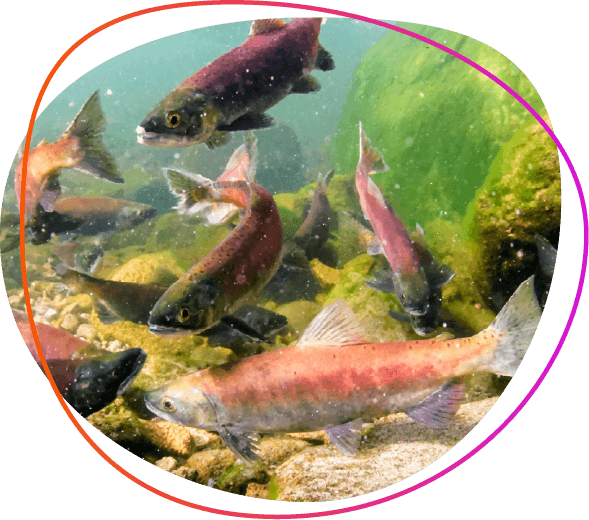
High-performance system accelerates salmon research
A state fisheries laboratory monitoring salmon populations faced slow data processing that delayed time-sensitive research. Genetic sequencing runs could take more than six hours, limiting staff capacity and pushing some large genome analysis work to outside providers. With climate change and hatchery practices affecting salmon stocks, faster and more reliable in-house processing was essential for fisheries management.
Resource Data partnered with the lab to assess needs, define business and technical requirements, and design a high-performance computing system. Work included workflow reviews, staff interviews, and vendor evaluations to ensure the solution balanced speed, scalability, and long-term support.
The new system significantly reduced processing time, supports multiple concurrent jobs, and enables larger genome datasets to be analyzed in-house. Researchers now have quicker access to results, strengthening the lab’s ability to support sustainable salmon management statewide.

Medical Network of Alaska
Replacing Network Frustration with Confidence and Capacity
Medical Network of Alaska, a rapidly growing healthcare provider with eight facilities across Alaska, was constrained by an under-built network that could not keep pace with expansion. Daily traffic issues created frustration and risk, and years of short-term decisions left the IT team with limited visibility into infrastructure and application needs.
Resource Data completed a comprehensive assessment of the environment, reviewing hardware, servers, data, and applications to define true requirements. The team documented clear specifications and evaluated vendors through demonstrations and side-by-side comparisons. A structured decision matrix with dozens of parameters supported selection, along with a candidate bill of materials and vendor pricing.
This process gave the organization the clarity to a scalable solution that improved outcomes at a comparable cost. With a stronger foundation in place, the organization is better equipped to support growth and maintain reliable operations across all facilities.
State Maritime Non-profit
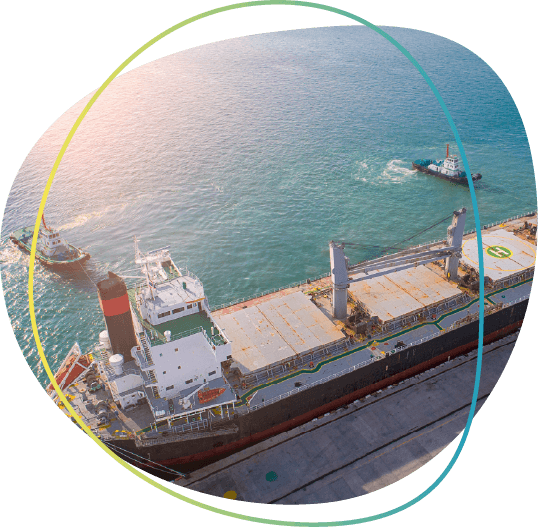
A Network Reset for Dependable Vessel Tracking
A statewide maritime non-profit operating more than 180 tracking sites and 30 vessels depends on its network for vessel telemetry and emergency communications. The system often underperformed, with unreliable data delivery, poor VoIP quality, and unclear ownership across teams. The impact threatened service reliability, funding, and planned expansion.
A full review of operations and systems identified root causes and produced a roadmap, guided by Resource Data. The effort clarified team responsibilities, redesigned the network for scalability, and implemented key changes including a move to BGP routing, added redundancy, and Quality of Service to prioritize telemetry traffic.
The redesigned network now delivers over 99.5% telemetry reliability and more stable communications across Alaska. The stronger foundation reduced costs, improved collaboration, and supports expansion with confidence.

Infrastructure Solutions
Infrastructure That Holds Up As You Grow and Change.
Infrastructure problems rarely announce themselves early. They surface as dropped connections, fragile access, unplanned refreshes, and recovery plans that fail when pressure is highest. Disciplined engineering restores stability, makes change predictable, and turns networks, data centers, and recovery into foundations teams can rely on as demand grows.

Network Foundation
Resilient Networks as Foundations for Growth.
Growth pushes routing, wireless, and wide-area links to their limits. When that point is reached, teams start chasing drops, poor voice quality, and telemetry delays. Change can become risky and upgrades can feel a bit like a gamble. Solving these problems starts with mapping traffic and confirming capacity. Next comes the redesign of LAN and WAN patterns with redundancy, BGP routing, and QoS controls for critical flows. For a smooth transition, cutovers should be staged and logged in ITSM. The results of redesigned networks: clearer ownership, declines in outages, improved reliability, and metrics that surface issues earlier.
Secure Edge Connectivity
Cut Outages and Risk at the Edge.
As networks age, branch firewalls and VPN stacks age out while policies keep growing. Rules drift. Exceptions pile up. Remote access can become fragile and hard to explain. These challenges become visible as support effort rises and confidence drops. The solution is to standardize edge designs with high-availability firewalls. We help deliver SD-WAN rollouts and ZTNA patterns that align with identity and endpoint controls. Within this framework, profiles are versioned and deployed through repeatable runbooks. The outcomes are that audit evidence is ready when asked for, users stay connected, and policy change becomes manageable.
Data Center Modernization
Modernize Data Centers with Control.
Refresh cycles must be carefully planned to avoid ad hoc buys that leave power, storage, and virtualization out of balance. It is also problematic when teams inherit platforms that are hard to patch and even harder to scale. Risks can grow quietly until the next outage or capacity crunch. We can help assess your workloads and build a capacity model. Next, we design a reference architecture for compute, storage, and high-speed networking that fits resilience and security needs. Subsequent migration efforts follow runbooks with a rollback plan verified before cutover. The outcomes are operational standards, a clear plan for rack, power, consolidation, and intentional cloud integrations.
Storage and Recovery
Recover Critical Data When It Matters.
Many teams rely on data snapshots and assume restores will work. Then an outage hits and recovery stalls resulting in significant operational impacts. To avoid such a data recovery crisis, storage and backup needs to be designed around your RPO and RTO. Retention policies and replication patterns are then defined with restore steps documented in detail to establish solid recovery runbooks. Monitoring and alerting should be built into the design as well as execution of test restores that are run on a regular schedule. Now when a data failure scenario strikes, you can restore the right systems in priority order and bring services back quickly and safely.



Bear Remien
Service Area Lead, Systems Engineering
Bear Remien is an expert systems engineering leader with over 20 years of experience guiding organizations through complex infrastructure, security, and transformation initiatives. He combines deep technical judgment with steady leadership, enabling teams to design and operate resilient enterprise systems in highly regulated and operationally demanding environments. Bear is particularly effective at aligning stakeholders, shaping technical direction, and leading teams through high-risk efforts such as data center modernization, cybersecurity hardening, and large-scale organizational change.
Our Systems Engineering Services
Build confidence into your systems.







Talk to Bear Remien

"*" indicates required fields
What happens
next?
- We'll schedule a conversation
- Share your challenges and goals
- Plan your journey together