


IT Operations & ITSM
When uptime and customer trust are on the line, operational discipline matters more than ever. We help teams replace reactive workarounds with an operating approach that makes accountability clear, decisions defensible, and execution consistent.
Expertise
IT Operations That Hold Up Under Pressure.
When operations are built on unclear ownership and unreliable information, every incident and change becomes a negotiation. We help organizations replace improvisation with disciplined operational governance that teams can execute consistently and leadership can stand behind. The following areas of expertise show how we strengthen the foundations that keep services stable—so performance is measurable, decisions are traceable, and the operating model remains defensible as environments, vendors, and delivery methods evolve.
Asset & Configuration Management
Reduce outages, failed changes, and audit findings by relying on asset and configuration data you can trust. We design ITIL-aligned asset and configuration management with disciplined CMDB models, automated discovery, lifecycle controls, and clear ownership. No more CMDB guesswork. You gain a governed system of record that stays accurate as environments change. Expose true service dependencies, support safer changes, and perform stronger audits. As a result, you get more informed decisions about cost, risk, and modernization.


Business Continuity & Disaster Recovery Planning, Runbooks
Protect operations and obligations by keeping critical services available during outages and disasters. We build business continuity and disaster recovery programs with defined RTO and RPO targets, role-based runbooks, and exercise plans based on real failure scenarios. We map critical business services to the infrastructure and vendors they depend on, clarify escalation paths and decision rights, and keep plans current through governance and regular reviews. The result is more predictable recovery, fewer last-minute decisions, and more stable operations.
Policies, Standards & Procedures
Reduce operational risk and audit friction with IT policies and procedures people can actually follow. We assess and rationalize existing documentation, then design policies aligned with ITIL, COBIT, and security control requirements. We draft or update priority standards and procedures, set review cadences, and tie guidance directly to ITSM workflows and tools. We also clarify ownership so responsibilities stay clear as teams and vendors change. The result is traceable compliance, faster onboarding, and more consistent execution across the environment.


Roles, Responsibilities & RACI
End finger-pointing and stalled decisions by making accountability clear across IT and shared services. We design role models and RACI maps for IT operations and ITSM, clarifying decision rights and ownership across services and processes, including vendor touchpoints. No more mystery about roles and ownership. We incorporate accountabilities into workflows, governance, and role descriptions so escalation paths and approvals are consistent. The result is clarity. Faster decisions, cleaner handoffs, and teams that scale operations and change without relying on a few people to hold everything together.
Service Desk & End-User Support Enablement
Reduce ticket volume and improve the end-user experience by stabilizing your service desk. We redesign support using ITIL-aligned workflows, right-sized SLAs, and knowledge practices, supported by modern ITSM tooling and automation. No more black-hole queues. You get clear routing, repeatable playbooks, and self-service patterns that reduce rework and shorten resolution time, including clean handoffs to vendors when needed. The result is faster service, better visibility into demand, and more consistent, auditable execution without inflating support costs.


Work Management & Change Enablement
Bring order to demand and adoption by turning scattered requests into a governed pipeline of work. We design unified intake and prioritization with clear decision rights, then pair each initiative with structured change enablement across communications, training, and stakeholder readiness—aligned to your ITSM and delivery tools. No more surprise go-lives. You get repeatable playbooks, standard artifacts, and adoption measures that show what changed and whether it is sticking. The result is transparent demand, fewer collisions, and changes delivered with less disruption to teams and operations.
ITSM Operating Model
Make IT service management reliable and measurable, with governance leaders can support. We design ITSM operating models that align incident, problem, change, request, and catalog practices. There are no more process islands with clearer roles, SLAs, and control points. We map services and connect ITIL disciplines to DevOps and cloud delivery so teams can move faster without creating risk. The result is an integrated ITSM backbone with sustained visibility, auditability, and control as the environment evolves.
Our Clients
Hundreds of clients. Thousands of projects.







Resource Data’s Data Engineer, together with technical city staff, outlined an approach that eliminated the risks we had in the older reporting solutions while also providing new capabilities that many of our employees didn’t think possible.
~ Greg Hanmer, Sr. IT Manager, Data Services, City of Boise

State Native Health Consortium
Automating Issue Tracking with SharePoint
Supporting more than 30 regional health groups, a statewide health consortium was limited by a manual, spreadsheet-based system for tracking issues. Staff emailed files back and forth, causing delays, missed items, and frustration for member organizations.
Resource Data partnered with the consortium to build a SharePoint-based system aligned to its workflows. The solution automated issue management from intake to resolution, assigning owners and due dates, escalating overdue items, and tracking resolution time. When standard SharePoint features fell short, custom workflows and SQL Server Reporting Services were added to meet reporting needs.
The new system reduced manual effort, improved accountability, and gave leadership clearer visibility into performance, helping strengthen relationships with member organizations.

State Railroad Corporation
A secure, organization-wide Microsoft 365 rollout
A statewide transportation corporation with 600+ employees wanted to get more value from its Microsoft 365 licenses after migrating off its internal email system. To support collaboration, file sharing, and security across the business, the IT team needed guidance to set up the environment securely.
The project started with discovery sessions to confirm requirements and align the configuration with security standards. Pilot deployments confirmed Teams as the replacement for older collaboration tools. OneDrive addressed long-standing file storage and sharing issues. Resource Data also launched a SharePoint Online hub that gave administrators and staff one place to find training and support resources.
The rollout delivered a stable Microsoft 365 environment for internal and external users. Employees had simpler access to communication and file-sharing tools, and IT administrators were better prepared to manage and expand the platform over time.
Native Corporation
Planning IT transformation to support growth
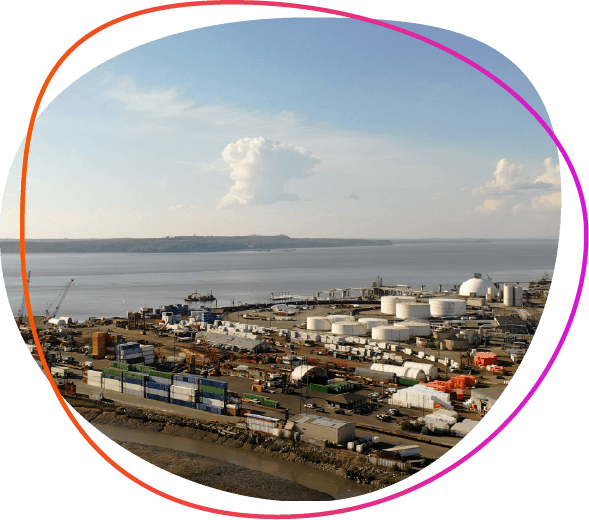
A fisheries management program serving federal, state, and international partners needed to move its fisheries tracking system from aging Oracle servers to Azure. The migration also required a security program strong enough to meet strict federal requirements.
The new environment was designed and provisioned with virtual networks, hardened servers, firewalls, and a SIEM integrated with threat intelligence feeds. Resource Data led the work to align with federal security standards and built a complete security framework, including a system security plan, more than a dozen policies, and a plan of actions and milestones.
With regular security drills, penetration testing, and ongoing monitoring, the program gained stronger governance and resilience to protect critical fisheries data. The cloud platform improved compliance, reduced risk, and created a sustainable foundation for long-term operations.

Major Utility Company
Building a unified IT environment for utility operations
A major Alaska utility acquired another utility, requiring a complex merger of IT systems, staff, and processes. The transition had to protect business continuity and avoid any disruption to customer service.
Resource Data led a coordinated integration program across multiple IT workstreams. Efforts included network redesign, datacenter and application migrations, mobile and desktop deployments, and consolidation of wireless systems. Disaster recovery processes were also established to improve resilience.
Ongoing support has included infrastructure upgrades, ERP transitions, application integrations, and business process improvements. The unified, modernized environment expands the utility’s capabilities while maintaining reliable service for customers.

Petro 49 and Shoreside Petroleum
Microsoft 365 tenant consolidation simplifies collaboration
Petro 49 and Shoreside Petroleum, family-owned Alaska fuel distributors, operated in separate Microsoft 365 tenants. Employees struggled with multiple logins, misplaced files, and confusion around Teams meetings and shared data. Collaboration suffered, and IT spent time on avoidable support issues.
Resource Data led a full tenant consolidation. Using AvePoint Fly for data synchronization, the team confirmed requirements, resolved Active Directory synchronization issues, and migrated accounts, Teams, OneDrive, and Exchange data. Communication planning and a coordinated cutover helped minimize disruption.
After the migration, staff could collaborate across departments and locations without switching accounts or losing data. IT trouble tickets dropped significantly, and user efficiency and confidence in Microsoft 365 improved. The unified tenant provides a secure, scalable foundation for continued collaboration and growth.


Bear Remien
Service Area Lead, Systems Engineering
Bear Remien is an expert systems engineering leader with over 20 years of experience guiding organizations through complex infrastructure, security, and transformation initiatives. He combines deep technical judgment with steady leadership, enabling teams to design and operate resilient enterprise systems in highly regulated and operationally demanding environments. Bear is particularly effective at aligning stakeholders, shaping technical direction, and leading teams through challenging efforts such as data center modernization, cybersecurity hardening, and large-scale organizational change.
Our Systems Engineering Services
Build confidence into your systems.







Talk to Bear Remien

"*" indicates required fields
What happens
next?
- We'll schedule a conversation
- Share your challenges and goals
- Plan your journey together