



How Verified Voting Boundaries Shaped Accurate Redistricting in the Census Cycle
In Brief
Aligning Voting Boundaries Before Redistricting
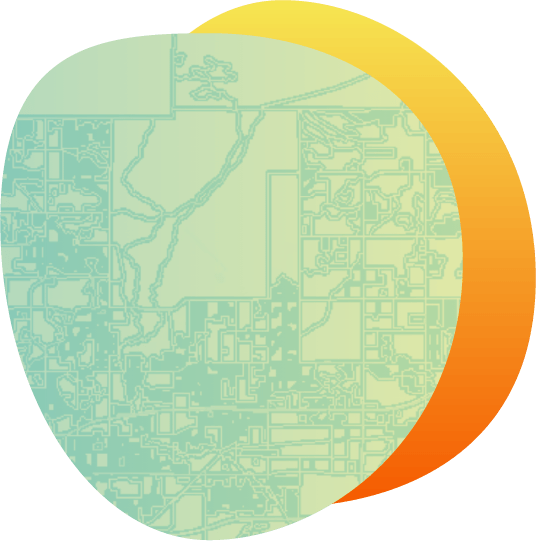
Redistricting requires more than drawing lines on a map. It depends on accurate geographic data to ensure districts can be drawn fairly, efficiently, and without error. One of our client’s voting precincts and census blocks were misaligned during Phase II of the census cycle, making it harder to adjust boundaries and achieve balanced populations.
From 2012 through 2021, Resource Data supported the state through multiple phases of redistricting. Our GIS team verified voting districts, aligned precincts with Census geography, and resolved underlying data inconsistencies. This work gave the state greater flexibility to balance populations, produce clearer maps, and reduce errors during redistricting legal processes.
Key Takeaways
How Better Data Improves Redistricting Outcomes
-
Aligned Voting and Census Boundaries Enable Accurate Districting
By verifying and aligning precincts with census geography, the state reduced inconsistencies and created a reliable dataset for redistricting.
-
Clean Data Supports Precise Population Balancing
Eliminating gaps, overlaps, and slivers allowed planners to make small, accurate population adjustments when drawing districts.
-
Collaborative Legislative Review Ensures Data Is Ready for Redistricting
Working closely with the Secretary of State and legislative staff, Resource Data validated boundary updates, resolved discrepancies, and ensured the dataset met operational and census requirements.
-
Census Tools Ensure Data Is Accurate and Ready for Redistricting
Using the Census Bureau’s Geographic Update Partnership Software (GUPS) and ArcGIS Pro, Resource Data identified topology errors, validated boundaries, and ensured the dataset met census requirements before submission.
-
Clearer District Maps Lowers Legal and Compliance Risk
Consistent, gap-free boundaries helped ensure districts met population requirements and reduced the risk of legal challenges.

Western State Legislative Office
Every ten years, following the national census cycle, the state’s redistricting commission undertakes the critical task of redrawing legislative district boundaries to reflect population changes. Each district must have roughly equal population, comply with federal voting laws, and fairly represent both rural and urban communities for roughly 2 million residents. Redistricting determines how people are represented in government, shaping representation and political power across communities especially during state elections.
Resource Data has supported a western state across multiple census cycles. During the 2000 redistricting cycle, our team worked with statewide precinct data and digitized historic boundaries. In 2012 and 2019, we supported key phases of the Census Redistricting Data Program, verifying voting district boundaries and developing mapping tools for redistricting. This partnership has enabled the state to maintain aligned, reliable data for accurate and efficient redistricting.

The Challenge
When Boundaries Don’t Align, Redistricting Needs Realignment
Redistricting is both a technical and public task. Small geographic inconsistencies, such as misaligned precincts or Census blocks, can make districts harder to balance and can increase legal risks tied to population equality and boundary accuracy. The cycle undergoes five phases with the first two phases being the most impactful phases, Phase II being the heart of the redistricting data cycle.
In 2019 and 2020, Phase II of the census redistricting process required states to verify and align voting districts with census geography. For this state, misaligned boundaries created gaps, overlaps, and slivers in the data. Without adjusting for population imbalances of 2 million people, they had increased risk of errors or maps being legally challenged or redrawn during later phases of the state’s redistricting process.

Our Approach
Supporting Phase II of the Census Redistricting Process
To prepare the state for redistricting, Resource Data implemented a structured workflow to verify and align voting districts with census geography standards. Using the Census Bureau’s Geographic Update Partnership Software (GUPS) with ArcGIS Pro, our team ran census validation scripts, identified gaps and topology errors, and corrected boundary inconsistencies including the elimination of slivers.
We then aligned precinct boundaries to census geography, ensuring no gaps between districts. Throughout the process, we worked closely with the Secretary of State and legislative staff to review updates and ensure all changes met census requirements before submitting the verified dataset.

The Solution
Clear and Verified Voting Boundaries for Accurate Redistricting
Resource Data delivered a verified, census-aligned voting district dataset to support the next redistricting cycle. By validating precinct geometry, correcting topology issues, and aligning boundaries with census geography, we ensured all voting districts were accurate, consistent, and free of gaps or overlaps. This clean geospatial data sets the tone for the remainder of the legislative redistricting process.
Results
A Stronger Map Foundation for Faster and Clearer Census Next Steps
With a verified, fully aligned voting district geospatial dataset, the state entered redistricting with a clean, reliable geographic foundation. Legislative planners were able to make precise population adjustments without being constrained by misaligned boundaries or data inconsistencies.
By resolving these issues upfront, the state reduced technical rework, accelerated the redistricting process, and lowered the risk of errors or legal challenges, resulting in clearer, more reliable district maps.

What's Next
Preparing Early for the Next 2030 Census Cycle
Building on the successful completion of Phase II efforts, Resource Data continues to support the state with early boundary preparation during Phases I and II of the 2030 redistricting cycle. By engaging years in advance, the state is positioned for a smoother, more efficient redistricting cycle grounded in accurate data and proven technical leadership.